Web application and software platform for operational physical post: letters, envelopes, printing, tariff handling, tracking, and integrations with postal services. In practice, it is a unified environment where a team manages shipments from preparation to status handling within a single operational workflow instead of relying on fragmented manual steps.
The goal of the platform is to make physical post a manageable, transparent, and repeatable process: clear statuses, less operational randomness, centralized management, and a foundation for further automation.
Who it is for:
Companies, offices, legal teams, NGOs, and service organizations that systematically work with large volumes of correspondence, documents, and shipments.
Core capabilities
Letter and envelope management (preparation, accounting, coordinated statuses)
Print preparation and layout tooling for postal formats
Tariff and weight calculation based on postal shipment logic
Shipment tracking and processing of statuses / events within the operational workflow
Postal expense visibility and structured operational records for accounting, reimbursements, and tax-related workflows
Support for scanner-assisted and printing operations where required by the workflow
Operational dashboards, activity logs, and history for team collaboration
Infrastructure for postal workflows and internal processes (SaaS-oriented)
Platform concept
Physical post in Licko App is treated not as a collection of disconnected manual actions, but as operational infrastructure.
The platform is described through the concept of a “mail operations layer” — a digital layer that standardizes, structures, and automates traditional postal workflows between people, equipment, and external postal services.
The development direction includes further expansion of:
workflow automation
shipment lifecycle management (from creation to delivery / closure)
postal and tariff infrastructure
operational analytics
collaborative multi-user workflows
document pipelines
integrations with postal services and APIs
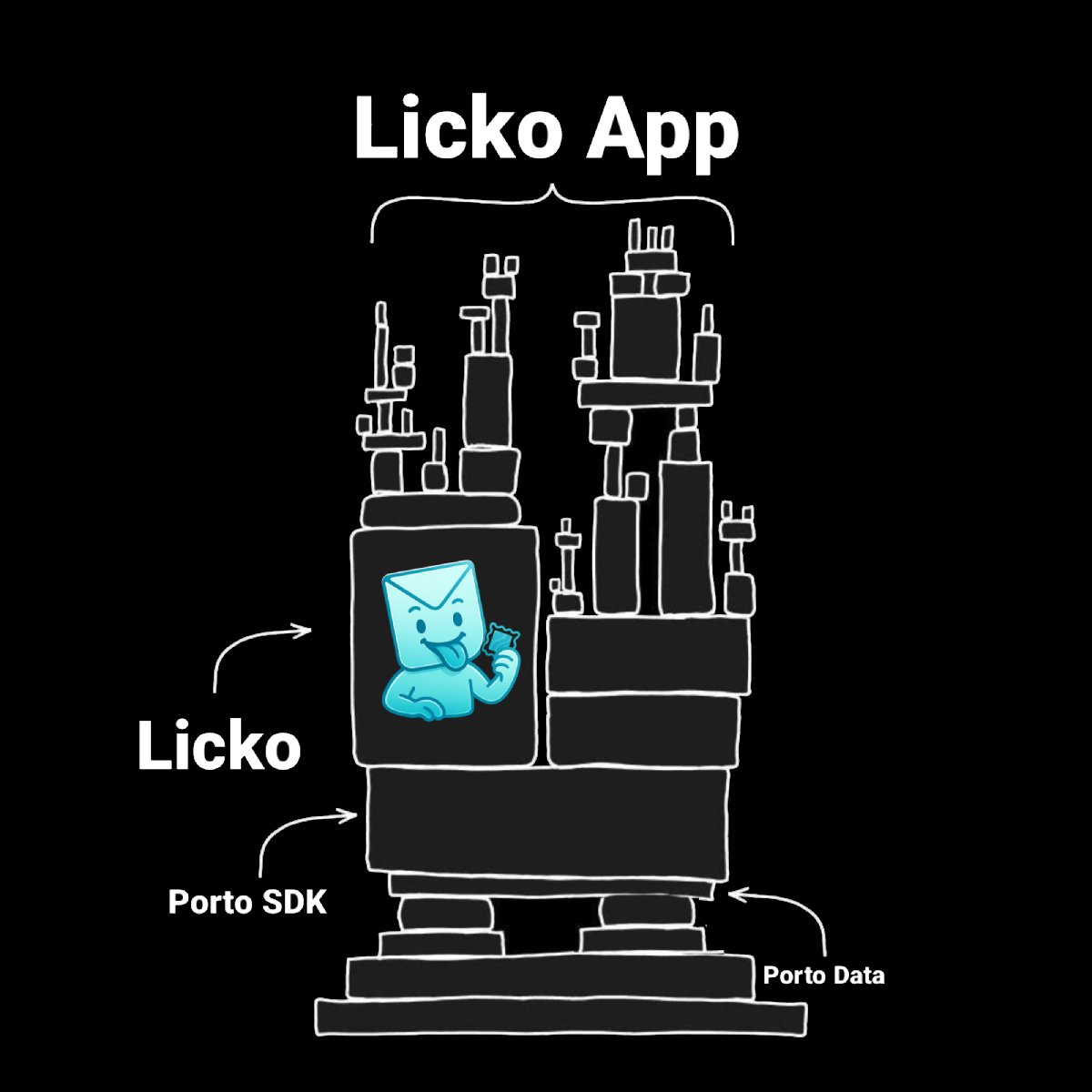
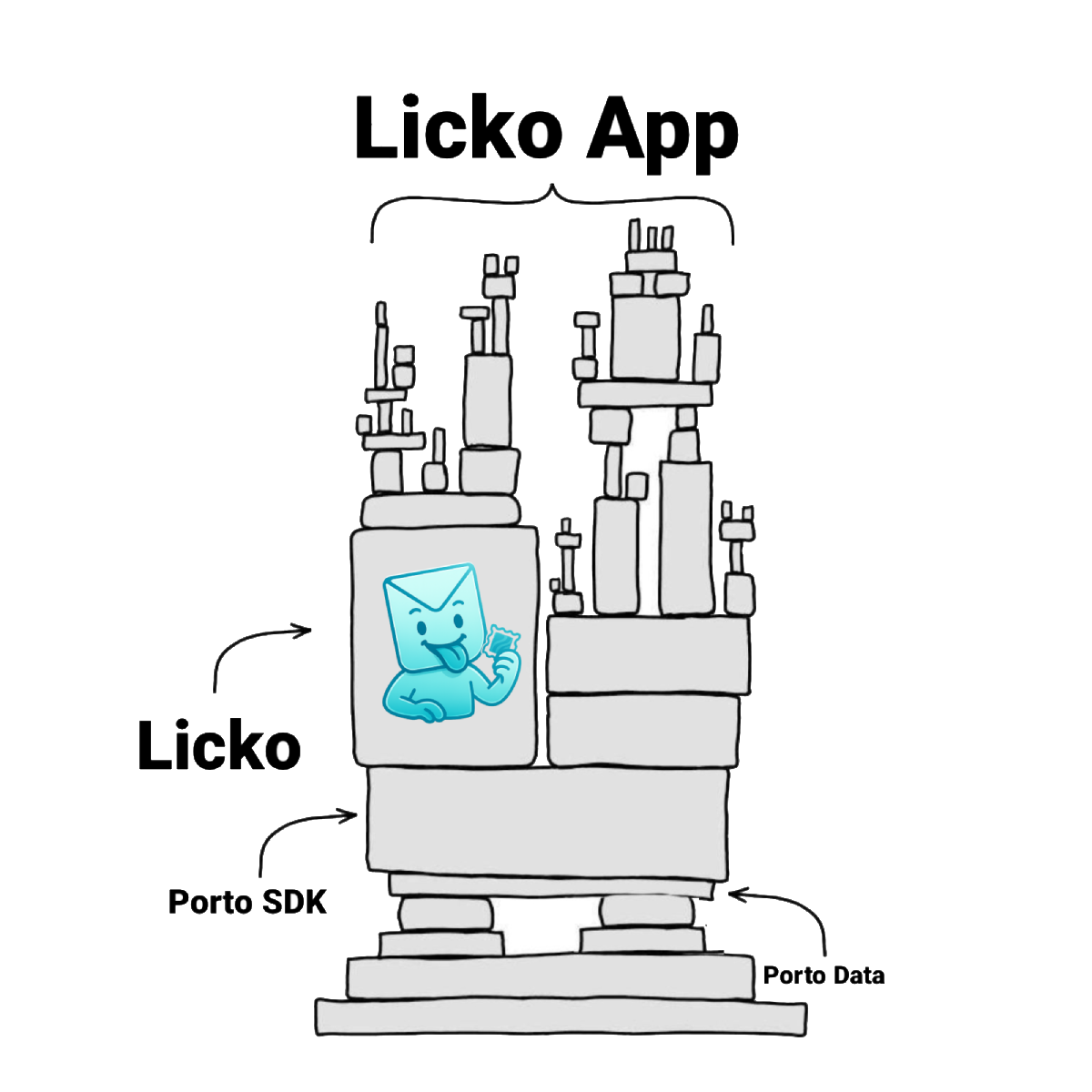
Licko App and Porto SDK
Licko App is the operational workspace for physical post. It gives teams one place to prepare and manage mail, work with shipments, track statuses and history, and handle day-to-day postal operations. Licko turns postal data, rules, and constraints into practical decisions and workflows for people.
Licko App architecture simply
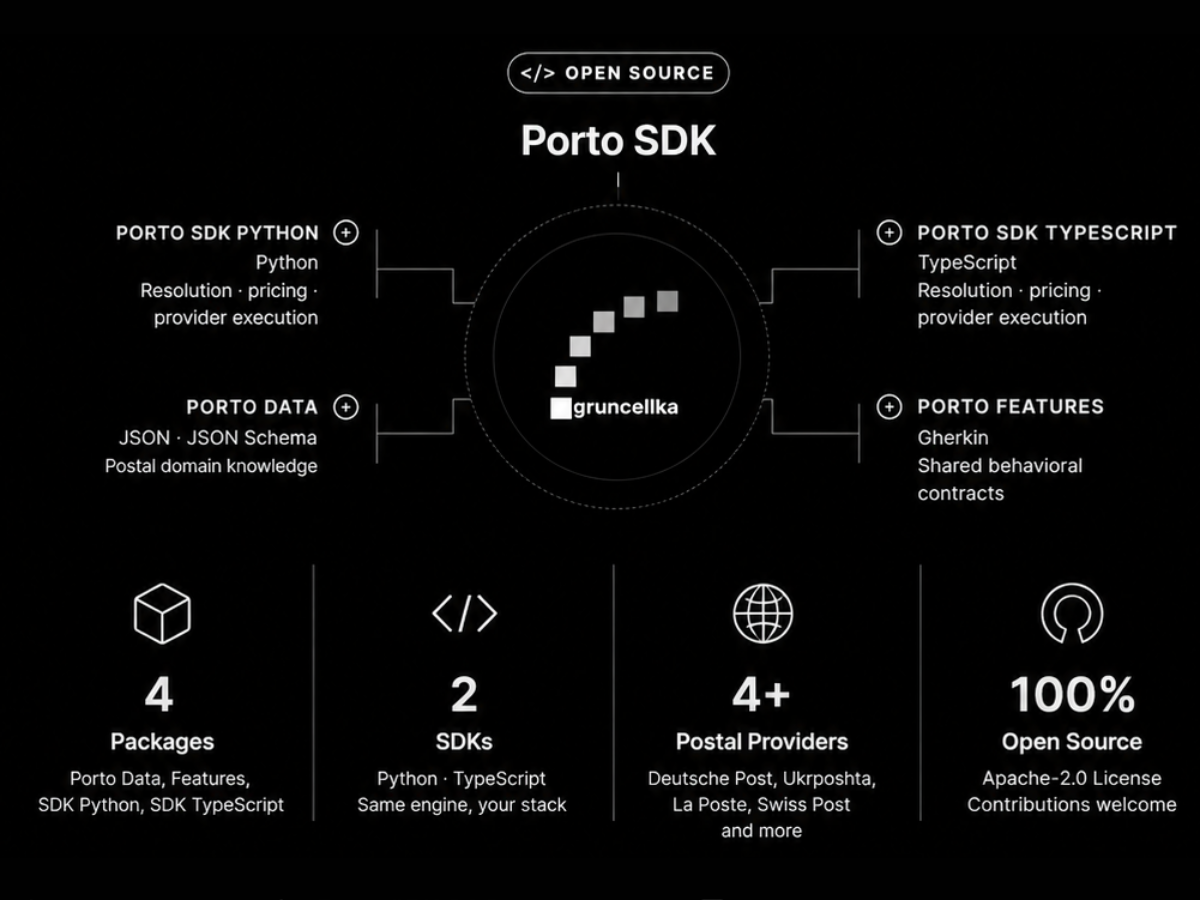
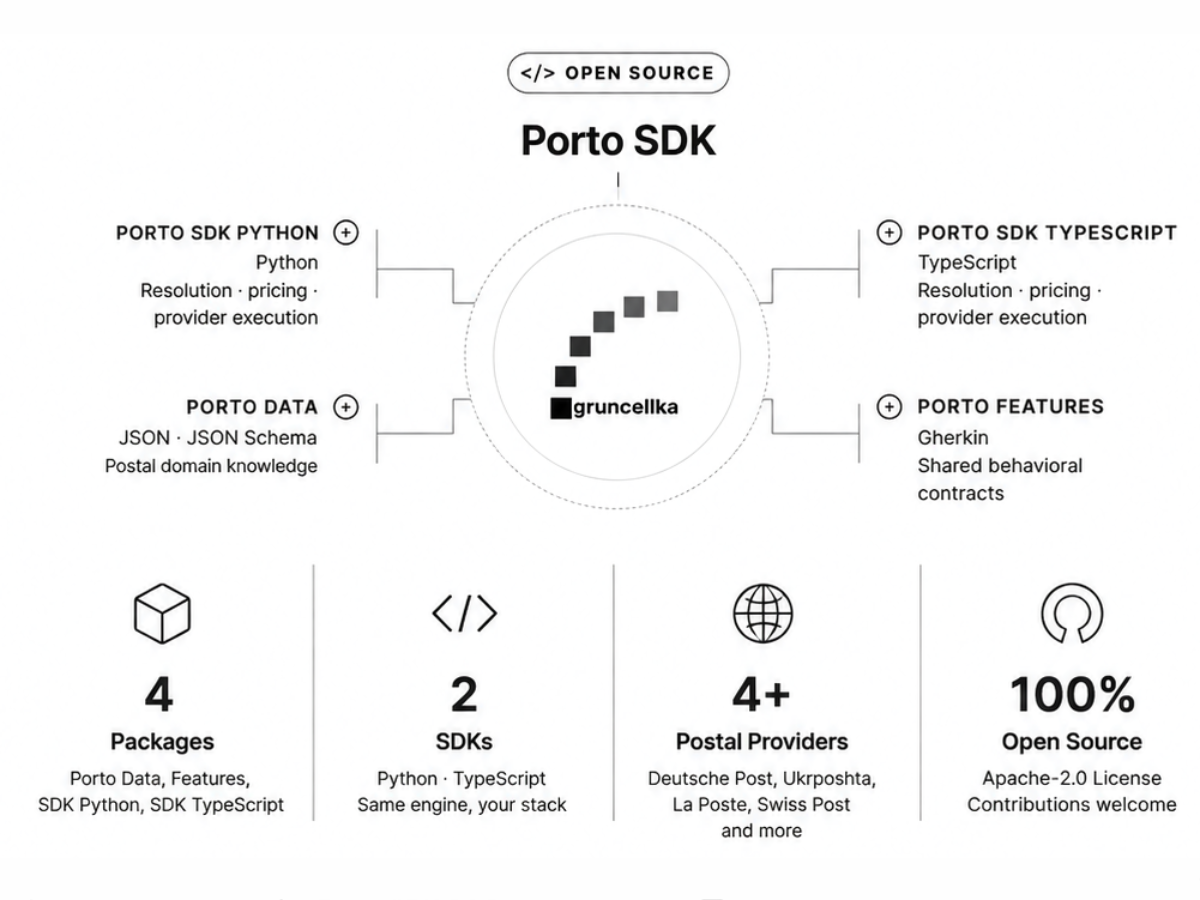
Porto SDK is the integration toolkit behind these capabilities. It lets developers perform postal operations in their own applications, internal services, CRM/ERP systems, and custom workflows simply and efficiently. Teams can automate shipment preparation and processing, integrate printing and tracking, work with postal products and services, and build workflows where a ready-made web interface is not enough.
Porto Data is the structured postal knowledge layer used by the SDK. It provides schema-validated data for postal products, pricing, zones, dimensions, services, restrictions, and other provider-specific rules in a normalized form.
Porto Features builds operational capabilities on top of Porto Data and the SDK’s core primitives. Instead of exposing only raw postal information, features turn that knowledge into reusable functions for solving concrete postal tasks — such as evaluating available products, validating constraints, estimating a mailing, or determining suitable options for a physical post composition.
Porto SDK Lab is the development and validation environment for the Porto SDK ecosystem. It is where SDK contracts, generated surfaces, schemas, documentation, and cross-language behavior can be inspected and verified before they become part of the supported developer experience.
In short: Porto Data organizes postal knowledge. Porto Features turns that knowledge into capabilities. Porto SDK makes those capabilities available to software. Porto SDK Lab develops and validates that developer surface. Licko App turns the same foundation into an operational workspace for people.
Porto SDK ecosystem simply
Technology direction
The platform is designed as a modern operational SaaS with a focus on:
maintainable architecture
privacy-aware approaches to infrastructure
operational clarity (what happened, who performed the action, and when)
scalable workflows
modern UX for historically “legacy” processes
modularity and long-term evolution without a rigid monolith
Status
The web app was developed as an independent software product within gruncellka (Berlin, Germany).
Licko App is currently in β and available online at licko.app
Frequently asked questions
How is Licko App different from a postal operator?
A postal operator handles delivery and shipment logistics. Licko App is not a delivery service — it is a software infrastructure layer above postal services.
The platform helps organize, standardize, and automate postal operations between teams, documents, printing, tracking, and external postal services within a unified operational workflow.
Licko App can integrate with multiple operators and services, but it does not replace physical delivery itself.
How is Licko App different from an e-mail client?
Licko App does not work with digital correspondence. It is focused on physical post workflows: printing, tariffs, shipments, tracking, and operational processes around them.
What does “mail operations layer” mean?
It is a digital layer above physical post that unifies steps, data, and statuses as if mail were part of a company’s operational system rather than simply “taking a letter to the post office.”
When is Licko App needed, and when is Porto SDK needed?
Licko App is for the team’s daily operational work inside the platform interface.
Porto SDK is for integrating the same workflows into CRM systems, internal portals, backends, or custom operational systems.
Is Licko App a native iPhone or Android app?
No. Licko App is a web application: you open it in a browser. It is not installed from the App Store or Google Play as a native mobile app.
Are all countries and operators supported?
The set of supported workflows, operators, and countries depends on the product stage and available integrations.